Mastering the Art and Science of Precision Glass Fabrication
The creation of intricate glass components, from laboratory equipment to specialized filtration devices, demands a profound understanding of material science, thermodynamics, and highly refined craftsmanship. The process involved in understanding how to blow glass bongs is a prime example of such precision, combining artistic vision with rigorous technical execution. This section delves into the detailed manufacturing process, materials, and stringent quality controls that define high-quality glass fabrication.
Core Product Materials: Borosilicate Glass
At the heart of durable and chemically resistant glass products lies borosilicate glass, renowned for its superior thermal shock resistance and chemical inertness. Composed primarily of silica (70-80%), boron trioxide (7-13%), sodium oxide and potassium oxide (4-8%), and aluminum oxide (2-7%), borosilicate glass exhibits a significantly lower coefficient of thermal expansion (CTE) compared to soda-lime glass. This characteristic minimizes internal stresses during rapid temperature changes, making it ideal for applications requiring robustness under varying thermal conditions. Its exceptional resistance to chemical corrosion by water, acids, salts, and organic solvents further underscores its suitability for demanding environments.
The Manufacturing Process: From Rod to Refinement
The fabrication of high-quality glass components, particularly those requiring complex geometries and internal structures, typically involves specialized lampworking techniques combined with precise furnace operations. This process demands expert control over heat, air pressure, and manual manipulation.
Step 1: Material Preparation
Selection of high-purity borosilicate glass rods and tubing. Dimensions are precisely chosen based on the final product specifications. Materials are inspected for any imperfections that could compromise structural integrity.
Step 2: Heating & Forming (Lampworking)
Glass is heated to its working temperature (typically 800-1200°C) using a propane-oxygen torch. Skilled artisans meticulously manipulate the molten glass, employing techniques such as blowing, shaping with tools, and joining separate sections. This is where the initial form and intricate internal structures are created, demanding precise control over airflow and rotation.
Step 3: Annealing
After shaping, the glass is carefully transferred to an annealing oven (kiln) where it is reheated to its annealing point (approx. 560°C for borosilicate) and then slowly cooled over several hours or even days. This critical process removes internal stresses introduced during heating and shaping, preventing cracking and ensuring long-term durability and structural integrity.
Step 4: Finishing & Grinding
Once annealed and cooled, the glass undergoes precise finishing operations. This can include diamond grinding for creating smooth, flat surfaces or perfectly sized joints, sandblasting for decorative or functional textured finishes, and fire-polishing to remove sharp edges and enhance clarity.
Step 5: Quality Control & Inspection
Each finished piece undergoes rigorous inspection against engineering drawings and quality standards. This includes visual inspection for defects, dimensional checks, and functional testing where applicable, ensuring every product meets specified parameters and performance criteria.
The intricate steps required demonstrate the advanced manufacturing expertise involved in developing complex glass products. Mastering how to blow glass bongs requires a deep understanding of these techniques, from initial material preparation to final quality assurance.
Testing Standards and Service Life
High-quality glass components are subject to stringent testing standards to guarantee performance and reliability. Key standards include:
- ISO 3585: Specifies properties for borosilicate glass 3.3, defining its chemical resistance, thermal expansion, and mechanical strength.
- ASTM E438: Classification of glass in laboratory apparatus, ensuring suitability for scientific applications based on chemical durability.
- Thermal Shock Resistance: Products are tested for their ability to withstand rapid temperature changes without fracturing, critical for various industrial and scientific uses.
- Chemical Durability: Tested against various reagents to ensure inertness and prevent contamination or degradation over time.
When manufactured to these standards, the service life of borosilicate glass components can extend for many years, even decades, under normal operating conditions, owing to their inherent durability and resistance to degradation.
Target Industries and Application Advantages
While the primary keyword refers to a specific consumer product, the underlying glass blowing techniques and material science are applicable across a broad spectrum of industries requiring precision glass. These include:
- Laboratory & Scientific Research: Beakers, flasks, condensers, reaction vessels, and specialized chromatography columns. Advantages: chemical inertness, thermal stability, optical clarity.
- Pharmaceutical & Medical: Drug delivery systems, sterile processing equipment, diagnostic tools. Advantages: biocompatibility, ease of sterilization, precise volumetric measurements.
- Chemical Processing: Heat exchangers, sight glasses, distillation apparatus. Advantages: corrosion resistance, high-temperature operation, visual process monitoring.
- Environmental Monitoring: Sample collection devices, gas analysis components. Advantages: non-reactive surfaces, accurate data collection.
- Artistic & Decorative Glass: Custom-designed installations, sculptures, and high-end functional glassware. Advantages: aesthetic appeal, design flexibility, perceived value.
In typical application scenarios, precision-blown glass offers significant advantages such as energy saving through efficient heat transfer in heat exchangers, enhanced process safety due to chemical resistance, and unparalleled aesthetic value in custom designs.
Industry Trends and Technical Parameters in Glass Fabrication
The landscape of high-precision glass fabrication is continually evolving, driven by advancements in material science, automation, and a growing demand for bespoke solutions. Key trends include the increased adoption of advanced borosilicate formulations, a focus on intricate design for enhanced functionality, and robust quality assurance protocols.
Key Industry Trends
- Enhanced Borosilicate Glass Formulations: Development of specialized borosilicate variants with even higher thermal stability or specific optical properties for niche applications.
- Precision Craftsmanship & Customization: A rising demand for unique, handcrafted glass items that combine aesthetic appeal with high functionality, such as decorative glass pipes and heady glass pipes. This trend emphasizes the artisan's skill in creating one-of-a-kind pieces.
- Integration of Digital Design: Use of CAD/CAM software to design complex internal structures and geometries, followed by precision manufacturing processes, reducing prototyping time and improving accuracy.
- Sustainability in Production: Focus on energy-efficient kilns, recycling glass waste, and responsible sourcing of raw materials to reduce the environmental footprint of glass manufacturing.
- Advanced Finishing Techniques: Innovations in surface treatments like sandblasting for improved grip or light diffusion, and specialized coatings for enhanced chemical resistance or anti-fog properties.
Typical Technical Parameters of Borosilicate Glass 3.3
Understanding the intrinsic properties of the material is fundamental to engineering robust and reliable glass components.
| Parameter | Value | Unit | Description |
|---|---|---|---|
| Coefficient of Thermal Expansion (CTE) | 3.3 | x 10⁻⁶ / K (20-300°C) | Indicates resistance to thermal shock. Lower values mean better resistance. |
| Annealing Point | 560 | °C | Temperature at which internal stresses are relieved during cooling. |
| Strain Point | 510 | °C | Temperature below which stresses are practically unobservable. |
| Softening Point | 820 | °C | Temperature at which glass begins to deform under its own weight. |
| Density | 2.23 | g/cm³ | Mass per unit volume. |
| Hydrolytic Resistance (ISO 719) | Class 1 | Highest class for resistance to water attack. | |
| Acid Resistance (ISO 1776) | Class 1 | Highest class for resistance to acid attack. |
Technical Advantages and Application Scenarios
The technical advantages derived from expertly blown glass are considerable, impacting both performance and longevity. These benefits translate directly into enhanced application scenarios across various sectors.
- Superior Chemical Resistance: Borosilicate glass resists nearly all chemicals, except for strong alkalis and hydrofluoric acid, making it indispensable for chemical processing and laboratory work.
- High Thermal Shock Resistance: Ability to withstand rapid temperature changes without breaking, critical for processes involving heating and cooling cycles.
- Optical Clarity: High transparency allows for visual monitoring of processes, essential in scientific and industrial applications.
- Hygienic and Non-Porous: Smooth, non-porous surfaces prevent contamination and are easy to clean, vital for pharmaceutical and food-grade applications.
- Dimensional Stability: Maintains precise dimensions even under varying thermal conditions, ensuring consistent performance of intricate components.
These advantages are particularly salient in custom fabrication, where specific internal geometries or external finishes are required. For instance, the creation of specific filtration devices or condensers relies heavily on the artisan's ability to precisely control glass wall thickness and joint integrity, a skill refined in processes like learning how to blow glass bongs with intricate percolators.
Vendor Comparison and Customized Solutions
Selecting the right vendor for precision glass products, including intricate items like heady glass pipes or specialized laboratory apparatus, requires a thorough evaluation of their technical capabilities, quality control, and ability to deliver customized solutions.
Vendor Comparison: Key Differentiators
When assessing vendors for glass fabrication services, several factors stand out as critical for B2B decision-makers.
| Feature | High-Tier Vendor (e.g., DS Glass Bong) | Standard Vendor |
|---|---|---|
| Material Sourcing | Certified Borosilicate 3.3, verifiable purity, consistent batches. | Varying quality, potentially less pure glass, inconsistent properties. |
| Manufacturing Precision | Hand-blown by master artisans, CNC grinding for critical joints, advanced lampworking. Tolerances within ±0.1mm. | Machine-assisted, less emphasis on intricate handwork. Wider tolerances. |
| Quality Control & Testing | Multi-stage inspection (visual, dimensional, functional), thermal shock testing, chemical durability checks. ISO 9001 certified. | Basic visual inspection, minimal stress testing. |
| Customization Capabilities | Full bespoke design, engineering support, rapid prototyping, complex internal structures, surface treatments (e.g., sandblasted, patterned). | Limited modifications to existing designs, fewer options for complex features. |
| Lead Time & Fulfillment | Transparent, consistent lead times, efficient logistics, global shipping. | Variable lead times, potential delays, less reliable logistics. |
| After-Sales Support | Dedicated support team, warranty, technical assistance, replacement parts. | Limited or no after-sales support. |
Customized Solutions for Specialized Applications
The ability to provide highly customized glass solutions is a hallmark of an advanced glass fabrication partner. This extends beyond simple modifications to encompass full design and engineering collaboration. Custom solutions often involve:
- Unique Geometries: Developing glass components with non-standard shapes, specific curvatures, or complex internal diffusion elements for optimized performance.
- Integrated Functionalities: Combining multiple features into a single glass piece, such as integrated heating elements, specialized ground joints, or unique filtration systems.
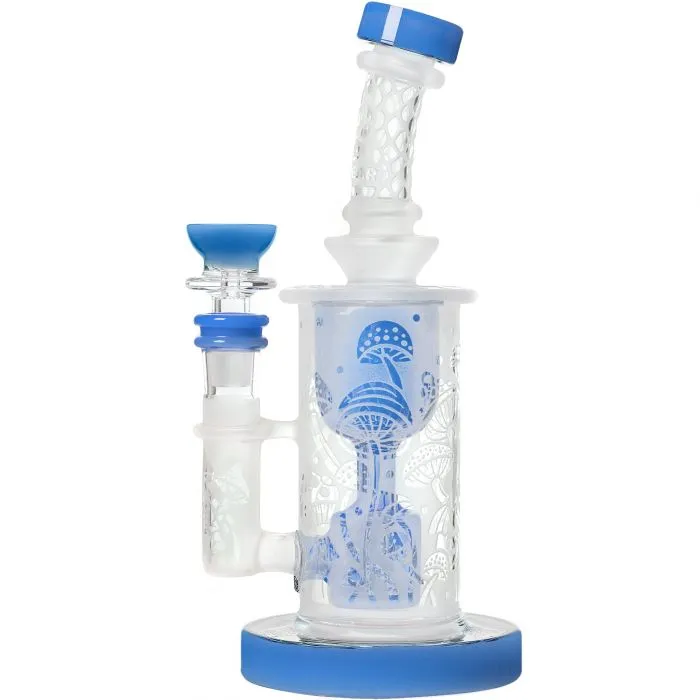
- Surface Treatments: Applying specific surface finishes like sandblasting for frosted effects, improved grip, or decorative patterns (e.g., Seed of Life designs). This is exemplified by products like the Alibear Sandblasted Seed of Life Torus Can Rig, where aesthetics meet functional design.
- Material Optimization: Tailoring glass wall thicknesses, joint types, and material grades to meet specific stress, thermal, or chemical exposure requirements.
For businesses looking to buy bong or specialized glass pipes, the option for bespoke decorative glass pipes or scientific glass pipes allows for product differentiation and performance optimization tailored to market demands. Understanding how to blow glass bongs with unique artistic and functional elements is key to this customization.
Application Case Studies and Product Spotlight
Real-world applications demonstrate the tangible benefits of high-quality glass fabrication. Here, we highlight a specific product, the Alibear Sandblasted Seed of Life Torus Can Rig, as a case study in advanced glass design and manufacturing, alongside general insights into customer feedback.
Product Spotlight: Alibear Sandblasted Seed of Life Torus Can Rig
The Alibear Sandblasted Seed of Life Torus Can Rig serves as an excellent example of combining intricate glass blowing techniques with advanced functional design and aesthetic finishing. Its complex structure and precise sandblasting require a high degree of craftsmanship and adherence to rigorous quality standards, demonstrating the pinnacle of how to blow glass bongs for specialized markets.
Product Specifications:
| Specification | Detail |
|---|---|
| Product Name | Alibear Sandblasted Seed of Life Torus Can Rig |
| Material | High-Grade Borosilicate Glass 3.3 |
| Design Feature | Torus Can shape for stable base and efficient water volume; Sandblasted Seed of Life pattern for enhanced grip and aesthetic appeal. |
| Internal Diffusion | Percolator system for optimized diffusion and filtration. |
| Joint Type | Precision Ground Joint (e.g., 14mm male) for secure fitting. |
| Dimensions | Typically 6-8 inches in height, 3-4 inches base diameter (varies by model). |
| Manufacturing Process | Lampworking, precision blowing, kiln annealing, sandblasting. |
General Application Case Study: Advanced Filtration Devices
A leading analytical instrumentation company required highly specialized glass filtration devices for a new generation of atmospheric gas analyzers. The challenge was to create complex internal structures with precise pore sizes and absolute chemical inertness to avoid sample contamination.
- Client Need: Filtration components capable of handling corrosive gases at varying temperatures, with extremely tight dimensional tolerances for integration into a sensitive optical path.
- Solution Provided: Our team leveraged advanced borosilicate lampworking techniques to create custom glass pipe structures, integrating fritted glass filters with specific porosities (e.g., 5-10 microns). Each unit underwent a multi-stage annealing process to eliminate stress, followed by ISO-compliant chemical durability and thermal shock testing.
- Results: The custom glass pipes demonstrated superior performance, exceeding the client's requirements for chemical resistance and thermal stability. The precise fabrication ensured seamless integration, leading to a 15% improvement in analytical accuracy and a 20% reduction in maintenance cycles due to enhanced durability. This project highlights how expertise in creating complex glass structures, akin to advanced glasses pipe designs, translates into high-value industrial solutions.
This case underscores the critical role of expertise in how to blow glass bongs and similar precision glass items in solving complex engineering challenges.
Ensuring Trustworthiness: FAQs, Fulfillment, and Support
Building and maintaining trust with B2B clients is paramount. This involves transparent communication, clear commitments on lead times and warranties, and robust after-sales support. Our commitment to quality extends beyond manufacturing to every aspect of the client relationship.
Frequently Asked Questions (FAQs)
Q1: What types of glass do you primarily use for your products?
A1: We exclusively use high-grade Borosilicate Glass 3.3 for its superior thermal shock resistance, chemical durability, and clarity, ensuring long-lasting and reliable products.
Q2: Can you accommodate custom designs and specific technical requirements?
A2: Absolutely. Our team of master glassblowers and design engineers specialize in creating bespoke solutions, from unique geometries and intricate internal structures to specific surface finishes like the sandblasted patterns on some of our decorative glass pipes. We excel in transforming conceptual designs into precise functional products.
Q3: What quality control measures are in place?
A3: Our process includes multi-stage inspections, from raw material verification to in-process checks and final product validation. We conduct dimensional accuracy tests, visual inspections for defects, and functional performance checks, all adhering to stringent internal protocols and relevant industry standards (e.g., ISO, ASTM).
Q4: What is the typical lead time for custom orders?
A4: Lead times vary based on design complexity, order volume, and current production schedule. For standard items, lead times are typically 2-4 weeks. For custom designs, it can range from 6-12 weeks, including design review, prototyping, and production. We provide clear estimates at the quotation stage.
Lead Time and Fulfillment Details
We maintain a streamlined production and logistics process to ensure timely delivery. Our manufacturing capacity allows for scalability, accommodating both small-batch specialized orders and larger volume requirements. All shipments are meticulously packed to prevent damage during transit, utilizing robust packaging materials and methods. We partner with reliable global logistics providers to ensure efficient and secure delivery to your specified location. Detailed tracking information is provided for all orders.
Warranty Commitments
We stand behind the quality and craftsmanship of our glass products. All items are covered by a standard 1-year warranty against manufacturing defects, provided they are used and maintained according to recommended guidelines. This warranty reflects our confidence in the durability and performance achieved by adhering to rigorous standards in how to blow glass bongs and other advanced glass products. In case of any issues, our dedicated support team is ready to assist with troubleshooting, repairs, or replacements.
Customer Support and After-Sales Service
Our commitment to our clients extends far beyond the point of sale. We offer comprehensive after-sales support including:
- Dedicated Account Management: A single point of contact for all your inquiries and support needs.
- Technical Assistance: Expert advice on product usage, maintenance, and integration into your existing systems.
- Prompt Issue Resolution: Efficient handling of any warranty claims or service requests to minimize downtime.
- Feedback Integration: We actively solicit customer feedback to continuously improve our products and services, ensuring we consistently meet and exceed expectations for diverse glass items, including buy bong requests for the discerning customer.
Authoritative References
- ASTM E438-92(2011) Standard Specification for Glasses in Laboratory Apparatus. ASTM International, West Conshohocken, PA, 2011.
- ISO 3585:1998 Glass for apparatus -- Borosilicate glass 3.3 -- Properties. International Organization for Standardization, Geneva, Switzerland, 1998.
- Scholes, S. R. (1975). Modern Glass Practice. Cahners Books.
- Corning Incorporated. (2007). Properties of Corning Glass. Corning, NY.