Accurate calibration of a dissolution vessel is critical for ensuring reliable results in pharmaceutical, food, and material science testing—where even minor deviations in vessel dimensions or alignment can compromise data integrity. As a wholesaler, understanding how to properly calibrate dissolution vessel models (including specialized options like apex vessel dissolution systems and standard dissolution bowl designs) helps you support customers in meeting regulatory standards (e.g., USP, EP, FDA). HEBEI DINGSHUO GLASSWARE CO.,LTD., a leading manufacturer of laboratory glassware, produces high-precision dissolution vessel products optimized for easy calibration, with consistent dimensions and durable construction that maintain accuracy over time. This guide breaks down the step-by-step calibration process for dissolution vessel types, highlights key parameters to monitor, and explains how to leverage HEBEI DINGSHUO GLASSWARE CO.,LTD.’s products for reliable, compliant testing.
Dissolution Vessel Key Calibration Parameters and Tools
Critical Dimensions for Calibration
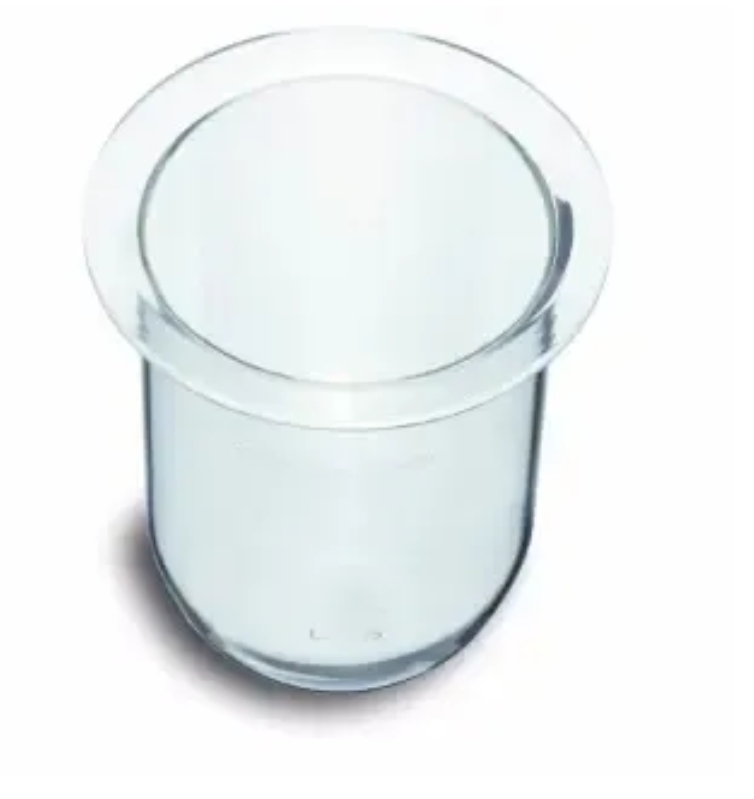
- Internal Volume and Height: A standard dissolution vessel (e.g., 1L capacity) must have an internal volume calibrated to ±2% of the stated capacity, per USP requirements. For HEBEI DINGSHUO GLASSWARE CO.,LTD.’s dissolution bowl models, use a certified volumetric flask to fill the vessel with distilled water at 25°C, then measure the volume against the vessel’s graduation marks. Additionally, calibrate the vessel’s internal height (from base to liquid surface at full volume) to ensure alignment with stirrer shafts—this prevents uneven mixing during dissolution tests.
- Inner Diameter Uniformity: The inner diameter of a dissolution vessel must be consistent (±0.5mm) across its height to avoid flow disruptions. Use a digital caliper to measure the diameter at three points (top, middle, bottom) of HEBEI DINGSHUO GLASSWARE CO.,LTD.’s dissolution vessel products; discard any vessels with irregularities, as they can skew dissolution rate results.
Alignment and Stirrer Compatibility
- Stirrer Shaft Alignment: For dissolution vessel calibration, ensure the stirrer shaft is centered within the vessel (±1mm) and positioned at the correct height (typically 25mm from the vessel base). HEBEI DINGSHUO GLASSWARE CO.,LTD. provides alignment guides for their apex vessel dissolution systems, which feature a specialized conical base that requires precise stirrer positioning to maintain laminar flow. Use a laser alignment tool to verify shaft centering—misalignment can cause up to 15% variation in dissolution rates.
- Bowl-to-Stirrer Fit: For dissolution bowl models, check that the stirrer (e.g., paddle, basket) fits snugly without touching the vessel walls. HEBEI DINGSHUO GLASSWARE CO.,LTD.’s dissolution bowl designs have a smooth, rounded base that minimizes stirrer contact, but regular calibration ensures this fit is maintained—wear from repeated use can widen gaps, affecting mixing efficiency.
Calibration Tools and Frequency
- Required Equipment: Calibrate dissolution vessel products using certified tools: digital calipers (accuracy ±0.01mm), volumetric flasks (Class A), laser alignment devices, and temperature-controlled water baths (±0.1°C). HEBEI DINGSHUO GLASSWARE CO.,LTD. recommends pairing their dissolution vessel with these tools for compliance with global standards.
- Calibration Schedule: Calibrate new dissolution vessel units before first use, then every 3 months for frequent use (≥5 tests/week) or every 6 months for occasional use. For apex vessel dissolution systems (which have more complex geometries), increase calibration frequency to every 2 months to ensure conical base integrity.
Table: Dissolution Vessel Calibration Checklist (HEBEI DINGSHUO GLASSWARE CO.,LTD.)
|
Calibration Parameter |
Specification (USP/EP) |
Tools Required |
Frequency |
Pass/Fail Criterion |
|
Internal Volume |
±2% of stated capacity |
Class A volumetric flask, distilled water |
Every 3–6 months |
Volume matches stated capacity (e.g., 1000mL ±20mL) |
|
Inner Diameter |
±0.5mm uniformity |
Digital caliper |
Every 3–6 months |
Diameter variation <0.5mm across height |
|
Stirrer Shaft Alignment |
±1mm centering |
Laser alignment tool |
Every 2–3 months |
Shaft remains centered during stirrer rotation |
|
Base Flatness (dissolution bowl) |
≤0.1mm deviation |
Surface profilometer |
Every 6 months |
No visible warping or unevenness |
|
Temperature Stability |
±0.1°C of set point |
Certified thermocouple |
Every 1 month |
Water bath temperature stays within range during 1-hour test |
Apex Vessel Dissolution System-Specific Calibration
Conical Base Calibration
- Unique Geometry Considerations: Apex vessel dissolution systems from HEBEI DINGSHUO GLASSWARE CO.,LTD. feature a conical base designed to enhance dissolution of low-solubility compounds. Calibrate this base by measuring the cone angle (typically 60° ±2°) using a protractor and verifying the base’s smoothness with a surface profilometer—any scratches or dents can create dead zones where solute accumulates, leading to inaccurate results.
- Volume at Apex Point: The apex vessel dissolution system’s volume at the cone’s apex (lowest point) must be calibrated to ensure complete immersion of the sample (e.g., 5mL ±0.1mL for 1L vessels). Use a micropipette to measure the volume required to cover the apex, adjusting the vessel’s liquid level as needed.
Flow Pattern Verification
- Laminar Flow Testing: Unlike standard dissolution bowl models, apex vessel dissolution systems rely on laminar flow to ensure uniform dissolution. Verify flow patterns by adding a small amount of dye to the vessel during stirrer operation (50–100 rpm); the dye should disperse evenly within 30 seconds. HEBEI DINGSHUO GLASSWARE CO.,LTD. provides a flow pattern guide for their apex vessel dissolution systems, helping users identify and correct irregularities (e.g., vortexing, stagnant areas).
- Stirrer Speed Calibration: For apex vessel dissolution systems, calibrate stirrer speed to ±1 rpm of the set value (e.g., 75 rpm ±1 rpm) using a digital tachometer. Speed variations can disrupt laminar flow—HEBEI DINGSHUO GLASSWARE CO.,LTD.’s vessels are designed to minimize speed fluctuations, but regular calibration ensures consistency.
Dissolution Bowl Maintenance and Calibration Troubleshooting
Routine Maintenance to Preserve Calibration
- Cleaning Protocols: After each use, clean dissolution bowl models with a mild detergent (avoid abrasive cleaners) and rinse thoroughly with distilled water. Dried residue can alter the vessel’s internal volume and diameter—HEBEI DINGSHUO GLASSWARE CO.,LTD. recommends ultrasonic cleaning for stubborn residues, which preserves the vessel’s smooth surface without scratching.
- Storage Guidelines: Store dissolution vessel products in a dedicated rack to prevent stacking (which can warp bases) and avoid exposure to extreme temperatures (≤50°C) or direct sunlight. HEBEI DINGSHUO GLASSWARE CO.,LTD.’s dissolution bowl models come with protective caps to keep dust out during storage, maintaining calibration accuracy between uses.
Common Calibration Issues and Solutions
- Volume Discrepancies: If a dissolution vessel fails volume calibration, check for residue buildup (clean thoroughly) or cracks in the glass (replace if damaged). For HEBEI DINGSHUO GLASSWARE CO.,LTD.’s vessels, minor volume adjustments can be made by re-etching graduation marks (performed by the company’s service team) to avoid replacing the entire vessel.
- Stirrer Misalignment: If stirrer alignment fails, adjust the vessel’s position in the water bath or replace worn stirrer shafts. HEBEI DINGSHUO GLASSWARE CO.,LTD. offers replacement parts for their dissolution vesseland apex vessel dissolution systems, ensuring quick resolution of alignment issues.
Dissolution Vessel FAQS
Why is calibration more critical for apex vessel dissolution systems than standard dissolution bowl models? ----H3
Apex vessel dissolution systems have a specialized conical base that relies on precise geometry and flow patterns to ensure accurate dissolution results—even minor deviations (e.g., 1° error in cone angle) can create stagnant areas where solute doesn’t dissolve properly. In contrast, standard dissolution bowl models have a simple cylindrical design that is more forgiving of small calibration errors. HEBEI DINGSHUO GLASSWARE CO.,LTD.’s apex vessel dissolution systems require stricter calibration (e.g., every 2 months vs. 3–6 months for bowls) to maintain their unique performance benefits, as their conical shape is engineered for low-solubility compounds that are highly sensitive to flow disruptions.
Can I calibrate a dissolution vessel from HEBEI DINGSHUO GLASSWARE CO.,LTD. using in-house tools, or do I need professional services? ----H3
Most dissolution vessel calibration tasks (e.g., volume, diameter, stirrer alignment) can be performed in-house using certified tools (Class A volumetric flasks, digital calipers). HEBEI DINGSHUO GLASSWARE CO.,LTD. provides a detailed calibration manual with step-by-step instructions for their dissolution bowl and apex vessel dissolution systems, making in-house calibration accessible. For complex tasks (e.g., conical base angle calibration for apex vessel dissolution systems or re-etching graduation marks), the company offers professional calibration services to ensure compliance with USP/EP standards. In-house calibration is sufficient for routine checks, but professional services are recommended annually for full validation.
How does temperature affect dissolution vessel calibration, and how can I account for it? ----H3
Temperature impacts dissolution vessel calibration because glass expands or contracts with temperature changes—for example, a dissolution vessel calibrated at 25°C will have a 0.3% larger volume at 37°C (typical dissolution test temperature). To account for this, calibrate the vessel at the same temperature as its intended use (e.g., 37°C for pharmaceutical tests) using a temperature-controlled water bath. HEBEI DINGSHUO GLASSWARE CO.,LTD.’s dissolution vessel products are made from borosilicate glass, which has a low coefficient of thermal expansion (3.3 × 10⁻⁶/°C), minimizing volume changes. Always record the calibration temperature and adjust results if the test temperature differs, ensuring compliance with regulatory requirements.
What should I do if a dissolution bowl fails calibration due to a cracked base? ----H3
If a dissolution bowl from HEBEI DINGSHUO GLASSWARE CO.,LTD. fails calibration due to a cracked base, replace the vessel immediately—cracks can leak liquid, alter volume measurements, and compromise test safety. Do not attempt to repair the crack (e.g., with adhesive), as this will introduce additional volume errors and may release contaminants into the test solution. The company offers replacement dissolution bowl models with quick shipping to minimize downtime, and their customer service team can help identify the cause of the crack (e.g., thermal shock, improper storage) to prevent future issues. Always discard cracked dissolution vessel products, as they cannot be reliably recalibrated.
How often should I replace a dissolution vessel to maintain calibration accuracy, even if it passes routine checks? ----H3
Even if a dissolution vessel passes routine calibration, replace it every 2–3 years (or after 500+ uses) to account for wear that may not be detected by standard checks (e.g., micro-scratches on the inner surface, gradual warping of the base). HEBEI DINGSHUO GLASSWARE CO.,LTD.’s dissolution vessel products have a longer lifespan (up to 3 years) due to their thick borosilicate glass (4mm) and precision manufacturing, but regular replacement ensures consistent performance. For apex vessel dissolution systems (which have more complex geometry), replace every 1.5–2 years, as the conical base is more susceptible to wear from repeated stirrer contact. Keeping a log of calibration dates and use frequency helps track when replacement is needed.
Proper calibration of dissolution vessel products—including standard dissolution bowl models and specialized apex vessel dissolution systems—is essential for meeting regulatory standards and ensuring reliable test results. HEBEI DINGSHUO GLASSWARE CO.,LTD.’s high-precision dissolution vessel designs simplify calibration, with consistent dimensions and durable construction that maintain accuracy over time. As a wholesaler, guiding customers to follow the calibration steps outlined in this guide (e.g., verifying volume, aligning stirrers, troubleshooting issues) helps them maximize the value of their dissolution vessel investments. By prioritizing calibration and partnering with HEBEI DINGSHUO GLASSWARE CO.,LTD. for high-quality vessels, you can support customers in achieving compliant, reproducible results across pharmaceutical, food, and material science applications.