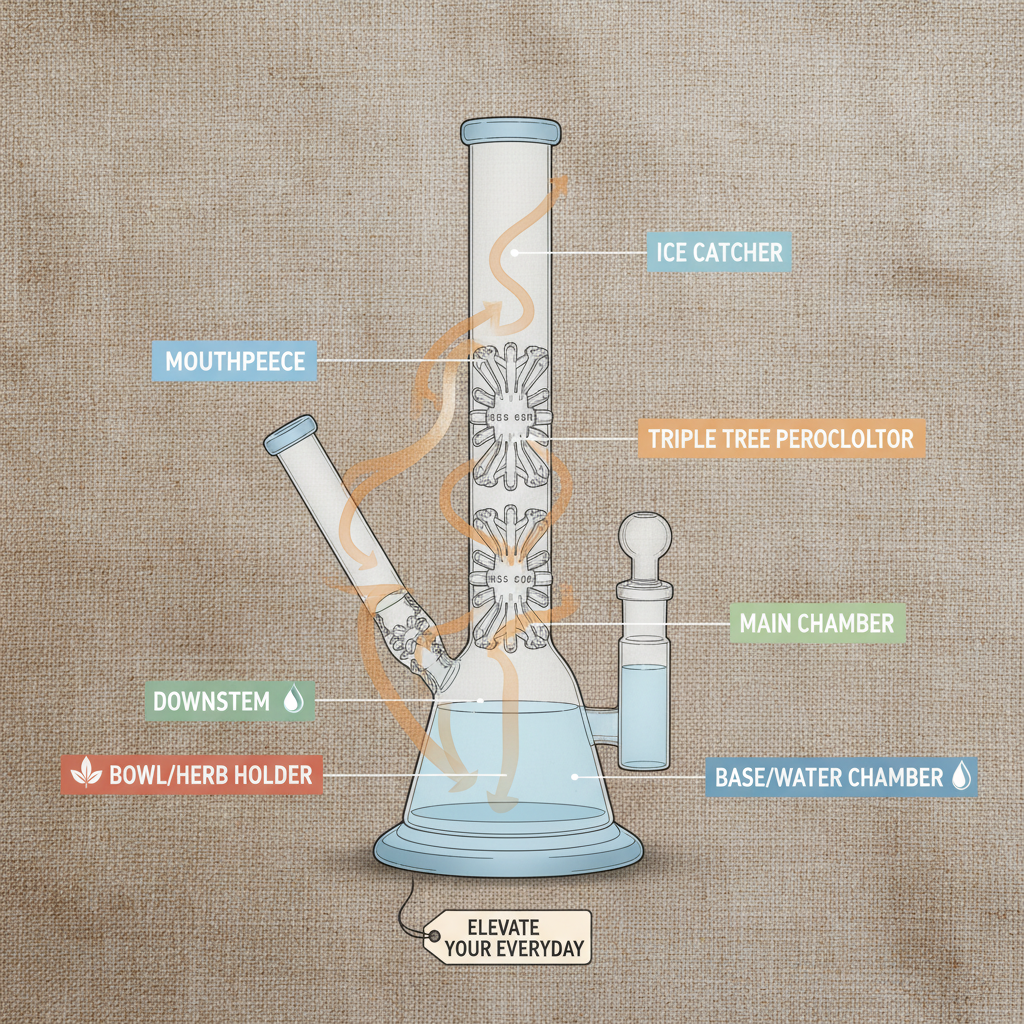
Understanding the differences between hookah vs cigarettes has become increasingly important as more people explore alternative smoking methods and look for accurate information beyond marketing claims. While hookah—also known as shisha, narghile, or waterpipe—has gained popularity in lounges, cafés, and home use worldwide, many smokers still wonder whether it is healthier than cigarettes, how the experience differs, and what long-term impacts to expect. This guide breaks down the major differences in design, usage, smoke composition, cultural context, and health considerations so readers can make informed decisions.
What Is a Hookah and What Are Cigarettes?
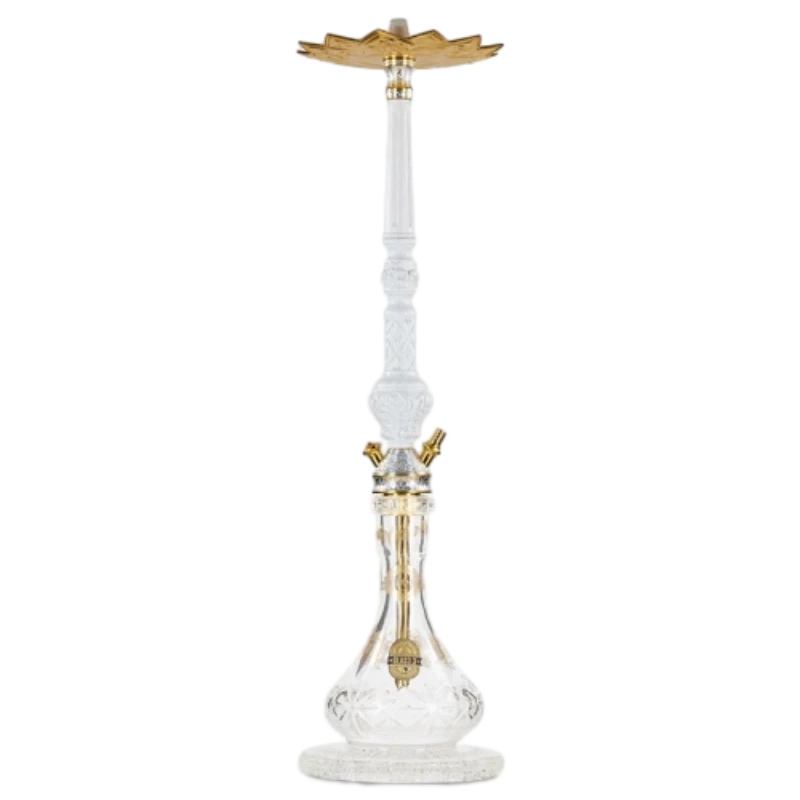
A hookah is a water-based smoking device originating from the Middle East and South Asia. The setup typically includes a bowl, stem, base filled with water, hose, and mouthpiece. Shisha (the flavored tobacco mixture) is heated using charcoal, creating smoke that passes through water before being inhaled.
A cigarette is a small cylinder made from shredded tobacco wrapped in paper. It burns directly when lit, delivering smoke straight to the user through the filter. Cigarettes are mass-produced, portable, and designed for short, quick smoking sessions.
These fundamental differences—design, materials, heat source, and method of inhalation—form the basis for understanding how hookah vs cigarettes compare from both lifestyle and health perspectives.
Smoking Duration and Consumption: Hookah Lasts Longer and Delivers More Smoke
One of the biggest distinctions is time. A typical cigarette lasts about 5–8 minutes, while a hookah session often lasts 45–90 minutes.
Because of this, hookah users inhale far larger volumes of smoke. Studies show that a single hookah session can equal the smoke volume of dozens of cigarettes. This is not because the tobacco is stronger, but because the session is prolonged and the clouds are thicker due to water cooling and wide airflow.
Many new users assume hookah smoke is “cleaner” or “lighter” because it feels smoother. However, this sensation is due to water filtration and cooling—not a reduction in harmful substances.
Tobacco and Flavor Differences: Natural Shisha vs Processed Cigarettes
Hookah tobacco (“shisha”) is typically a mixture of tobacco, glycerin, molasses or honey, and flavorings. It burns at a lower temperature than cigarette tobacco because the heat comes from charcoal placed above the bowl rather than direct combustion. This lower combustion temperature reduces harshness but does not remove addictive or harmful components such as nicotine, tar, and heavy metals.
Cigarettes contain shredded, dried tobacco along with additives that control burn speed, flavor, moisture, and nicotine delivery. They burn at higher temperatures, producing a harsher, more concentrated smoke in a shorter time frame.
From a flavor standpoint, hookah offers a wide variety of sweet, fruity, herbal, and dessert-style tastes, which is one reason it appeals to social smokers. Cigarettes, in contrast, offer limited flavor profiles due to legal restrictions.
Social Experience: Hookah Is a Group Activity, Cigarettes Are Individual
Another key difference between hookah vs cigarettes is the cultural experience.
Hookah is traditionally a social ritual. People gather around the pipe, share conversations, and pass the hose around in a relaxed atmosphere. It’s associated with cafés, lounges, and group settings.
Cigarettes are more individualized and often consumed quickly during breaks or stressful moments. Their portability and speed make them practical but not necessarily social.
This lifestyle factor is one reason many cigarette smokers try hookah—it feels less habitual and more recreational.
Nicotine Intake: Hookah Delivers Nicotine Differently
Both hookah and cigarettes contain nicotine, but the way it is delivered differs greatly.
-
Cigarettes provide a sharp, fast nicotine hit, contributing to addiction.
-
Hookah offers a slower, smoother nicotine delivery, which can make users feel like it’s less addictive—though this perception is misleading.
A long hookah session can still deliver significant nicotine exposure, even if it feels milder.
Water Filtration: Misunderstood and Often Overestimated
A major misconception is that hookah is “safer” because smoke passes through water. While water cools and humidifies the smoke, it does not remove most of the toxic compounds.
Nicotine, carbon monoxide, carcinogens, and heavy metals still pass into the lungs. Water only makes the smoke feel smoother, which can encourage deeper and more frequent inhalation.
Charcoal Risks: Unique to Hookah Smoking
Smoking shisha involves heating the tobacco with charcoal, which introduces additional health considerations not present in cigarette smoking. Charcoal emits carbon monoxide, volatile organic compounds, and heavy metals. Poor ventilation or low-quality charcoal can further increase carbon monoxide exposure.
Cigarettes do not require external heat sources, so they do not share this particular risk.
Health Comparison: Hookah vs Cigarettes
Both are harmful, but the patterns of harm differ.
Hookah health considerations:
-
Longer exposure time increases total smoke intake
-
Charcoal adds carbon monoxide and additional toxins
-
Shared mouthpieces may increase transmission of germs
-
Smooth smoke can lead to unintended deep inhalation
Cigarette health considerations:
-
More frequent daily use increases addiction
-
Direct combustion generates highly concentrated toxins
-
Quick nicotine hit increases dependency cycles
-
Strong correlation with lung cancer, heart disease, and COPD
In short, cigarettes tend to be more habit-forming, while hookah sessions tend to be longer and more voluminous in smoke exposure. Neither is a safe alternative to the other.
Cost Comparison: Hookah Is a Social Investment, Cigarettes Are a Daily Expense
Hookah requires more initial investment—a pipe, bowl, hose, and charcoal—but once purchased, the cost per session is relatively low when shared among groups.
Cigarettes, on the other hand, require continuous daily purchases. Over time, cigarette smokers typically spend significantly more than occasional hookah users.
Which One Is Better? Final Thoughts on Hookah vs Cigarettes
Whether hookah or cigarettes are “better” depends on what you compare:
-
Experience: Hookah is more relaxing and social.
-
Convenience: Cigarettes are fast and portable.
-
Addiction: Cigarettes deliver sharper nicotine spikes.
-
Smoke volume: Hookah produces far more total smoke per session.
-
Health impact: Both are harmful in different ways—neither is safe.
For traditional smokers seeking an occasional, less harsh alternative, hookah smoke may feel more enjoyable. But for anyone concerned about long-term health, neither option should be viewed as harmless.