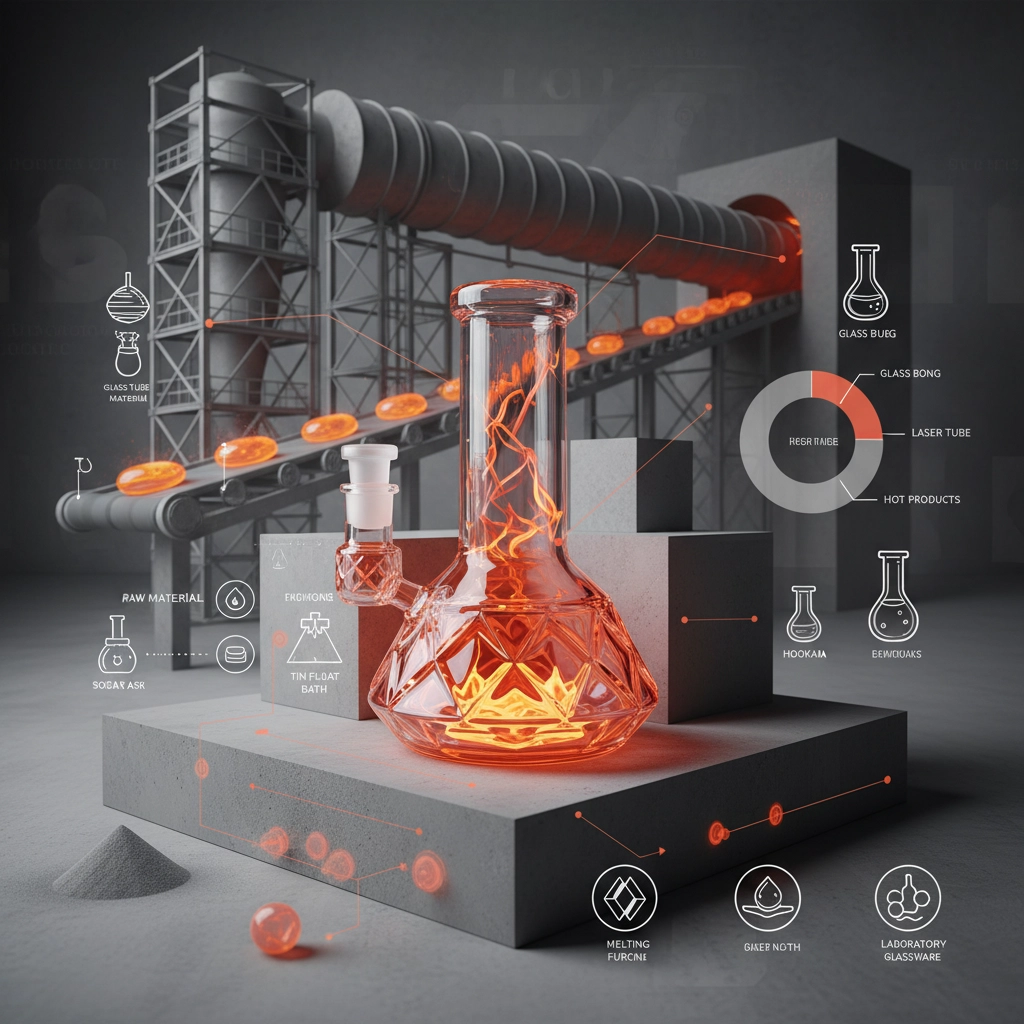
The evolution of high-end borosilicate glassware has led to the emergence of the diamond glass bong, a pinnacle of craftsmanship that blends artistic geometric precision with functional excellence. For enthusiasts and collectors globally, these pieces represent more than just utility; they are a marriage of physics and aesthetics, designed to optimize airflow while providing a visually stunning center-piece. Understanding the nuances of these pieces allows users to appreciate the intricate glass-blowing techniques required to achieve such complex, crystalline structures.
From a global market perspective, the demand for premium smoking accessories has shifted toward "investment pieces"—items that offer lifelong durability and timeless design. The diamond glass bong addresses the common industry challenge of balancing structural fragility with complex design. By utilizing reinforced joints and high-thermal-resistance glass, manufacturers are now able to produce multifaceted shapes that do not compromise the integrity of the vessel during intense heat cycles.
Ultimately, investing in a high-quality diamond-cut design ensures a superior filtration experience and a significant increase in the longevity of the product. Whether for professional laboratory-grade precision or luxury home use, these pieces set the standard for the modern glass industry. By exploring the technical specifications and artistic merits of these vessels, users can make informed decisions that balance cost, performance, and visual appeal.
The Material Science Behind Diamond Glass Bong
The foundation of a premium diamond glass bong lies in the use of high-grade borosilicate glass. Unlike standard soda-lime glass, borosilicate contains boron trioxide, which significantly lowers the coefficient of thermal expansion. This means the glass can withstand rapid temperature changes—such as the transition from a cold water base to a hot bowl—without cracking, a critical requirement for any high-performance smoking vessel.
Furthermore, the "diamond" aspect refers not only to the visual geometry but to the clarity and refractive index of the material. The precision in the smelting process removes impurities that could cause cloudiness or structural weak points. This results in a crystal-clear finish that enhances the visual appeal of the percolators and ensures that the user can monitor the cleanliness of the water and the purity of the vapor in real-time.
Precision Engineering and Geometric Stability
Achieving the diamond shape in a diamond glass bong requires an advanced understanding of structural geometry. Each facet must be carefully calculated to distribute the weight of the glass evenly, preventing stress concentrations that could lead to spontaneous breakage. The symmetry of the diamond cut provides a natural stability, allowing the piece to sit securely on various surfaces while maintaining an elegant profile.
The engineering process involves a combination of traditional lampworking and modern CNC-guided molding. By controlling the cooling process through a professional annealing oven, manufacturers eliminate internal tension within the glass walls. This ensures that the sharp angles characteristic of the diamond design are not points of failure but rather strengths that contribute to the overall rigidity of the device.
Moreover, the integration of thick-walled glass at the base and tapered joints ensures that the piece is resistant to accidental bumps. The geometric precision extends to the percolators inside, where the diamond-inspired patterns create a more turbulent water flow, maximizing the surface area for filtration and cooling the smoke more effectively than standard cylindrical designs.
Filtration Efficiency and User Experience
The primary objective of the diamond glass bong is to refine the inhalation process through superior filtration. By utilizing a faceted chamber, the smoke is forced to travel through multiple angles of water resistance, which strips away heavier particulates and cools the vapor significantly before it reaches the user.
Unlike traditional tubes, the diamond glass bong optimizes the "drag" or resistance of the hit. The diamond-shaped diffusion points break the smoke into thousands of tiny bubbles, increasing the oxygen-to-smoke ratio and preventing the harsh throat irritation often associated with lower-quality glassware.
From a user experience perspective, the ergonomic grip provided by the angled facets makes the diamond glass bong easier to handle and less likely to slip. This marriage of form and function ensures that the aesthetic beauty of the piece does not interfere with its primary purpose: providing a smooth, clean, and efficient session.
Comparative Performance of Glass Designs
When comparing the diamond glass bong to standard beaker or straight-tube designs, the differences in performance become evident in the cooling capacity and stability. While straight tubes offer simplicity, they often lack the complex diffusion needed for a truly smooth experience. The diamond structure acts as a natural heat sink, dissipating thermal energy more rapidly through its expanded surface area.
The following data represents a comparative analysis of various glass styles based on user satisfaction, durability, and filtration efficiency. The diamond-cut approach consistently scores higher in aesthetic value and filtration smoothness due to its intricate internal architecture.
Glass Design Performance Comparison
Global Market Applications and Cultural Impact
The diamond glass bong has transcended its role as a mere tool to become a symbol of luxury and artistic expression in the global market. In regions like North America and Western Europe, there is a growing trend of "glass art galleries" where these pieces are exhibited as sculptures. The intersection of luxury lifestyle and smoking culture has driven manufacturers to experiment with colors, iridescent coatings, and customized engravings.
Beyond the luxury sector, the precision techniques used to create the diamond glass bong are being adapted for other high-end glassware applications, including custom laboratory equipment and specialty lighting. The ability to create stable, complex geometric shapes in borosilicate glass is a skill highly valued across the non-metallic mineral products industry, proving that the demand for these designs extends far beyond their initial intended use.
Maintenance and Long-term Durability
Maintaining a diamond glass bong requires a dedicated approach due to its complex internal angles. While the borosilicate glass is incredibly durable, the accumulation of resin in the faceted corners can reduce filtration efficiency over time. The use of isopropyl alcohol and coarse salt remains the gold standard for cleaning, allowing the user to scrub the internal surfaces and maintain the crystal-clear transparency of the piece.
To ensure long-term durability, it is recommended to use padded storage cases and avoid extreme temperature shocks, although the material is designed for thermal resistance. Regular inspections of the joints and the base are essential to prevent hairline fractures from expanding. When handled with care, a diamond-cut vessel can last a lifetime, retaining its structural integrity and aesthetic brilliance.
Furthermore, the use of high-quality replacement bowls and downstems ensures that the diamond glass bong remains functional even after years of heavy use. By investing in a piece with standardized joint sizes, users can easily upgrade their accessories to match the evolving technology of the industry without needing to replace the main vessel.
Future Innovations in Diamond Cut Glassware
The future of the diamond glass bong lies in the integration of smart materials and sustainable manufacturing. We are seeing a shift toward the use of recycled high-grade borosilicate, reducing the environmental impact of the smelting process. Additionally, the application of nano-coatings is on the horizon, which could make the internal surfaces of the glass hydrophobic and resin-resistant, drastically reducing the need for frequent cleaning.
Digital transformation is also playing a role, with 3D modeling and AI-driven fluid dynamics being used to design the "perfect" diamond percolator. By simulating airflow and bubble size in a virtual environment, engineers can create a diamond glass bong that provides the absolute maximum cooling with the minimum amount of effort from the user, pushing the boundaries of what is physically possible in glass blowing.
As we move toward a more eco-conscious and tech-driven era, the combination of traditional artisan skill and automated precision will continue to elevate the status of these pieces. The diamond cut is not just a trend but a foundational shift in how we perceive the intersection of utility and art in the glass industry.
Technical Analysis of Diamond Glass Bong Design Variants
|
Design Variant
|
Thermal Resistance
|
Filtration Grade
|
Market Value
|
| Classic Diamond Cut |
High |
8/10 |
Premium |
| Reinforced Diamond Base |
Very High |
7/10 |
High |
| Iridescent Diamond Finish |
Medium |
8/10 |
Luxury |
| Multi-Percolator Diamond |
High |
10/10 |
Ultra-Premium |
| Compact Diamond Travel |
Medium |
6/10 |
Standard |
| Custom Engraved Diamond |
High |
9/10 |
Bespoke |
FAQS
The primary difference lies in the geometric construction and the resulting airflow. A diamond glass bong uses faceted walls and specialized internal diffusion points to break up smoke into smaller bubbles, providing superior cooling and filtration compared to the simple cylindrical paths of regular bongs. Additionally, the aesthetic appeal and structural stability are significantly higher due to the precision cutting and borosilicate grade used.
Contrary to popular belief, when manufactured correctly using professional annealing processes, the diamond design can be more stable than traditional styles. The facets help distribute pressure more evenly across the body. However, because of the complex shape, it is always recommended to use a padded base and handle the piece with care, especially around the joints.
Cleaning a diamond glass bong requires a combination of a high-purity isopropyl alcohol solution and coarse salt. Pour the mixture into the vessel, plug the openings, and shake vigorously. The salt acts as an abrasive that reaches into the faceted corners and diamond-cut percolators where brushes cannot reach, ensuring a deep and thorough clean.
Absolutely. Most diamond glass bongs are designed with versatile joints (such as 14mm or 18mm) that allow you to swap between a flower bowl and a quartz banger for concentrates. The superior filtration of the diamond design is actually highly beneficial for concentrates, as it helps cool the dense vapor produced during dabbing.
No, the term "diamond" refers to the geometric shape and the crystalline clarity of the high-grade borosilicate glass. It describes the faceted, multi-angled design that mimics the cut of a diamond, which enhances both the visual brilliance and the functional filtration of the piece.
To ensure you are getting a genuine piece made from laboratory-grade borosilicate glass with proper annealing, it is best to purchase from reputable specialized glass manufacturers. We recommend visiting professional platforms that provide detailed specifications on glass thickness and joint precision to ensure long-term durability.
Conclusion
The diamond glass bong represents the apex of modern glassware, combining the rigorous standards of material science with the timeless beauty of geometric art. From its high-thermal-resistance borosilicate composition to its precision-engineered filtration systems, every aspect of the design is optimized to provide a smoother, cleaner, and more visually satisfying experience. By prioritizing both stability and style, these pieces offer a long-term value that far exceeds traditional glassware.
Looking forward, the continued integration of sustainable materials and AI-driven design will only further refine the performance of these vessels. For those seeking to elevate their collection, investing in a diamond-cut design is not merely a purchase of utility, but an investment in craftsmanship and innovation. We invite you to explore the future of high-end glassware and discover the perfect balance of form and function. Visit our website: www.dsglassbong.com