Dissolution vessels are fundamental components in pharmaceutical laboratories, playing a critical role in the evaluation of drug release profiles. Their primary function is to contain the dissolution media—usually a liquid simulating bodily fluids—while allowing the drug formulation to dissolve under controlled conditions. This controlled dissolution environment enables researchers and quality control specialists to accurately measure the rate and extent to which an active pharmaceutical ingredient (API) is released, which directly impacts drug efficacy and safety.
High-quality dissolution vessels are engineered from borosilicate glass or quartz to withstand exposure to aggressive solvents, temperature fluctuations, and mechanical agitation without compromising chemical integrity or clarity. The optical transparency of these vessels is essential for visual monitoring during testing, while their durability ensures consistent performance over repeated use. Vessels must meet stringent dimensional tolerances and regulatory standards such as those set by the USP, EP, and FDA to ensure the reproducibility and reliability of dissolution test results across laboratories worldwide.
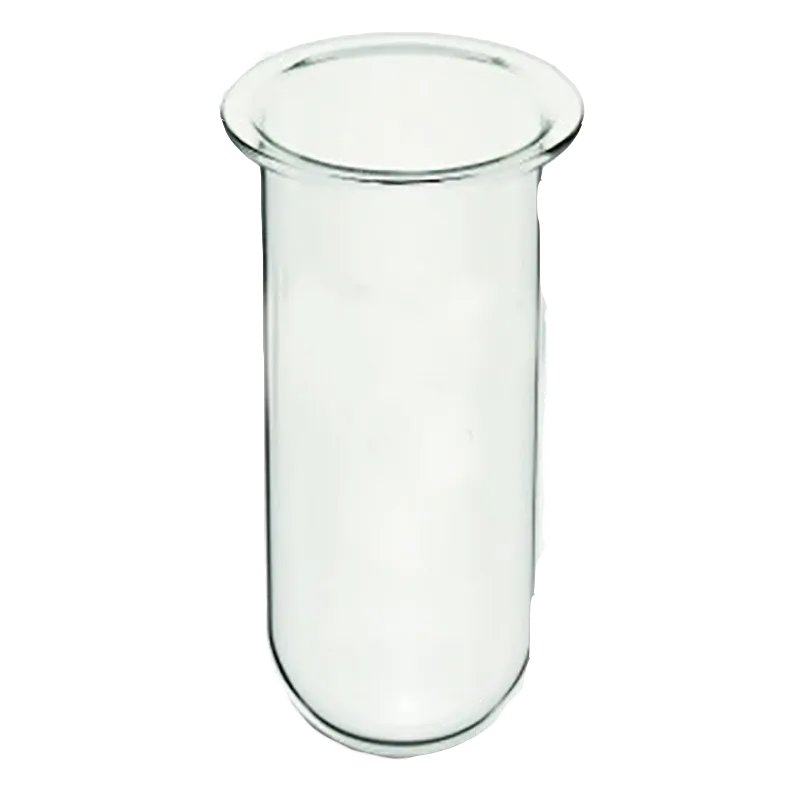
Peak Vessel for Dissolution: Enhancing Fluid Dynamics and Test Precision
The peak vessel for dissolution features a distinctive conical or tapered bottom design, which optimizes fluid dynamics inside the vessel. This geometry promotes efficient mixing by directing the flow of dissolution media upwards along the vessel walls, thereby preventing sedimentation of the drug particles. By maintaining a consistent suspension of the test sample, peak vessels help achieve more uniform and reliable dissolution profiles.
This design advantage is particularly beneficial for formulations with poor water solubility or those prone to settling. Peak vessels are constructed with the same high-quality materials as standard vessels, ensuring excellent chemical resistance and thermal stability. Their shape and material compatibility make them suitable for a wide range of dissolution testers, facilitating seamless integration into existing laboratory setups.
Features and Advantages of the 500ml Dissolution Vessel
The 500ml dissolution vessel is among the most commonly used sizes in pharmaceutical dissolution testing, balancing sufficient volume for a representative dissolution medium while maintaining compatibility with standard testing equipment. Its moderate size makes it versatile for a variety of formulations, including tablets, capsules, and oral suspensions.
Crafted from durable borosilicate glass or quartz, the 500ml vessel offers excellent chemical resistance to solvents and reagents typically employed in dissolution studies. Its transparency allows clear observation of the dissolution process, which is critical for detecting anomalies such as incomplete dissolution or precipitation. The vessel’s dimensions adhere to industry standards, ensuring precise fit with paddles, baskets, or other dissolution apparatus accessories, thereby preventing leakage or interference.
In addition to durability and compliance, the 500ml vessel facilitates efficient cleaning and maintenance, contributing to operational consistency and long-term cost-effectiveness in laboratory workflows.
Dissolution Vessels in Pharmaceutical and Laboratory Applications
The application of dissolution vessels extends across multiple domains within pharmaceutical science and beyond. In pharmaceutical research and development, these vessels are indispensable for studying drug release kinetics, aiding formulation scientists in optimizing bioavailability and therapeutic performance.
Quality control laboratories rely on dissolution vessels to verify batch-to-batch consistency, ensuring each production lot meets stringent regulatory standards and efficacy criteria. Consistent dissolution profiles are crucial for regulatory submissions and market approval.
Academic and scientific research institutions utilize these vessels for experimental studies, method development, and validation, contributing to the advancement of pharmaceutical sciences. Additionally, industrial manufacturing environments depend on dissolution testing with these vessels to perform in-process controls and final product evaluation, maintaining high standards of product quality.
The versatility and reliability of high-quality dissolution vessels make them integral tools across the pharmaceutical value chain, facilitating compliance, innovation, and safety.
Maintenance and Care for Longevity and Accuracy
Maintaining dissolution vessels in pristine condition is essential for ensuring the accuracy and repeatability of dissolution tests. Proper cleaning protocols involve using mild detergents compatible with glass or quartz materials, followed by thorough rinsing with deionized or distilled water to remove all residues that could affect subsequent tests.
Avoiding abrasive cleaning materials prevents surface scratches, which can harbor contaminants or alter fluid dynamics. Additionally, vessels should be handled with care to prevent chips or cracks, which may compromise test integrity and safety.
Regular inspections are recommended to identify any signs of wear or damage early, allowing timely replacement. Proper storage in padded, dust-free environments further preserves vessel quality. By adhering to stringent maintenance procedures, laboratories can extend vessel lifespan while ensuring reliable dissolution testing outcomes.
Dissolution Vessel FAQs
What is the primary function of a dissolution vessel in pharmaceutical testing?
A dissolution vessel serves as the container where the drug formulation interacts with dissolution media under controlled conditions. It enables accurate measurement of the drug release rate, providing critical data on bioavailability and therapeutic efficacy. The vessel must maintain chemical integrity and allow clear observation of the dissolution process.
Why is the peak vessel design preferred for certain dissolution tests?
The peak vessel’s tapered bottom enhances fluid circulation and prevents drug particle sedimentation, promoting uniform suspension throughout the test. This design leads to more consistent and reliable dissolution profiles, especially important for poorly soluble drugs or formulations prone to settling.
What makes the 500ml dissolution vessel widely used?
The 500ml size offers an optimal volume for balancing adequate dissolution media with equipment compatibility. It accommodates a wide range of dosage forms and adheres to standard dimensions for seamless integration with dissolution testers, paddles, and baskets, ensuring consistent test conditions.
How do dissolution vessels meet regulatory standards?
Dissolution vessels are manufactured to comply with USP, EP, and FDA requirements, including material composition, dimensional accuracy, and chemical resistance. These standards ensure reproducibility and reliability of dissolution tests, which are critical for drug approval and quality assurance.
What are the best practices for maintaining dissolution vessels?
Use mild detergents and rinse thoroughly with deionized water after each test. Avoid abrasive cleaners and prevent thermal shock by controlling temperature changes. Inspect vessels regularly for damage and store them safely to prevent contamination or physical harm, thereby maintaining test accuracy and vessel longevity.